


Employee motivation strategies to increase engagement is worthwhile. A motivated team that approaches work every day with commitment and enthusiasm is the heart of every successful company. However, in practice, this ideal situation often remains unattained. Many managers and HR professionals face the challenge of improving employee motivation without knowing the right employee motivation methods and tools. Effectively implementing employee motivation strategies is not a matter of luck — it is a skill that can be learned.
In this article, we explain what employee motivation really means. In addition, you will receive practical tips and tricks to improve workplace culture and sustainably increase workforce engagement. Use these employee motivation strategies to create an environment where team building and employee satisfaction come first.
Employees who feel physically and mentally healthy are less susceptible to illness, show higher motivation for employees, and are generally more satisfied.
5 Fundamentals of Employee Motivation
In psychology, motivation describes an internal state that drives individuals to invest time and energy into achieving goals. The higher the employee motivation, the more likely a person is to continuously work toward a goal, often with increasing effort. This drive is influenced by how effective a person believes their actions are in achieving that goal. If someone feels powerless to reach their objectives, motivation decreases.
Theoretical Approaches to Employee Motivation Strategies
To understand employee motivation strategies, it is helpful to look at motivation research. Research into the causes of motivation has produced two long-standing theoretical approaches: a biologically deterministic approach, which states that instincts and external influences determine our actions, and a theory that sees humans as autonomous individuals who control their own motivation through their actions. Modern psychology often combines both approaches depending on the context.
The Difference Between Motive and Motivation
Motivation should not be confused with the concept of motives, which in psychology refers to stable personality traits that guide our behavior. These can be innate or acquired and influence our general tendencies and lifestyles.
Intrinsic vs. Extrinsic Motivation
TThere are two types of employee motivation factors: intrinsic and extrinsic motivation. Intrinsic motivation comes from within an individual and is often driven by personal interest or enjoyment in the activity itself. Extrinsic motivation, on the other hand, is controlled by external incentives such as rewards or punishments. However, these incentives must be tailored to the individual in order to effectively motivate employees with incentives.
The Role of Leadership in Employee Motivation Strategies
The interaction between intrinsic and extrinsic motivation is complex. External incentives may influence behavior in the short term, but long-term employee motivation methods require strengthening intrinsic motivation through positive working conditions and recognition. Leaders play a crucial role in how to motivate employees because their leadership style can either support or hinder intrinsic motivation. Transparency, recognition, and opportunities for participation are key employee motivation strategies that significantly influence workplace culture and engagement.
Employee Motivation Factors
Employee motivation refers to the various factors and incentives that influence an employee’s willingness to be engaged and productive at work. These factors may be intrinsic or extrinsic and include everything from recognition by supervisors to identification with the job itself.
15 Ways to Motivate Employees
Employee motivation strategies are essential for the success of any company. They consist of a variety of factors that can motivate employees both intrinsically and extrinsically. Many aspects play a role when it comes to increasing employee engagement and willingness to perform. From appreciation by supervisors to personal identification with the work itself, every detail matters. In this article, we present 15 practical ways to motivate employees that help create a motivating work environment which not only increases productivity but also sustainably improves employee engagement.
1. Motivation for Employees Through Appreciation

Employees feel motivated when their work is recognized and appreciated by supervisors. This recognition may come in the form of praise, awards, or simply positive feedback and contributes to greater self-esteem. Feeling valued for one’s work cannot be underestimated. Without appreciation, emotional resignation is often not far away.
2. Team Trust and Collegial Support.
Strong trust between colleagues creates a supportive environment that promotes collaboration and performance. Employees who trust their team feel more secure and are more willing to take risks and develop innovative solutions.
Team-building activities using gamification and employee motivation games should be part of every company. Team building strengthens trust and cooperation among employees, leading to higher job satisfaction and motivation. Through shared activities and projects, teams learn to communicate more effectively and resolve conflicts, positively impacting workplace culture. Well-executed team-building activities also strengthen the sense of belonging and can sustainably improve employee motivation. In addition, they are fun and bring variety to everyday work. These also include easy-to-implement measures such as team challenges.
3. Belief in the Integrity of Company Leadership
Trust in company leadership is essential for employee motivation. When employees believe that top management acts with integrity and has a clear vision, this increases both motivation and loyalty.
4. Empowerment Through Trust from Leadership

The option to work flexibly from home can also score points with employee motivation and satisfaction. Many employees greatly appreciate the ability to work from home. Here, as an employer, you can effortlessly streangthen your employee motivation strategy.
When leaders trust their employees and delegate responsibility, it promotes independence and engagement. This empowerment strengthens employees’ self-confidence and their motivation to meet expectations.
5. Strengthen Conflict Resolution Skills in Leaders
Effective leaders who actively address and resolve problems create a work environment where employees feel supported and appreciated. This increases employee motivation and trust in management.
6. Promoting a Healthy Work-Life Balance
Supporting a healthy work-life balance is crucial for employee well-being and motivation. Enabling employees to balance professional and personal life reduces stress and improves job satisfaction.
7. Awareness of One’s Contribution to Company Success
Employees who understand how their work contributes to achieving company goals are often more motivated and engaged. This transparency gives them a sense of meaning and purpose.
8. Promoting Emotional Stability in the Workplace
Supporting emotional health in the workplace is also a significant part of your employee motivation strategy. A stable emotional environment enables employees to focus on their tasks and approach challenges positively.
9. Ensuring Fair Compensation
Appropriate and fair compensation is a fundamental way to motivate employees. Fair pay confirms the value of employees’ work and encourages commitment and engagement.
10. Strong Identification with the Professional Role
Employees who personally identify with their work and company values demonstrate higher motivation and satisfaction. This strengthens not only performance but also loyalty to the company.
11. Career Development Opportunities
Opportunities for professional growth are a decisive employees motivation factor for many people. Companies that provide clear career paths and actively support training and promotions can increase employee satisfaction and engagement. Employees feel valued and motivated to contribute to long-term company success.
12. Access to Professional Development Resources
Continuous learning and development opportunities are essential for employees’ personal and professional growth. Training programs, workshops, and e-learning platforms can strengthen team skills and are strategies for motivating employees.
13. Transparent and Fair Evaluation Processes
Fairness and transparency in performance evaluations are essential for employee trust. Clear and understandable review processes strengthen the sense of equality, increase employee motivation, and continuously improve performance.
14. Workplace Safety and Healthy

to rethink traditional workplace rules.
Be creative and dare to break the rules occasionally to enhance employee motivation. The design of the workspaces also influences the motivation and well-being of your employees. Be creative and dare to break the rules.
A safe and healthy workplace is fundamental to employee well-being. Companies that invest in preventive health measures and foster a culture of safety help minimize workplace accidents and occupational illnesses. For example, fitness challenges in the workplace can also contribute to this by encouraging physical activity and playfully motivating employees to adopt a healthier daily routine.This supports not only physical health and mental well-being but is also an employee motivation strategy.
15. Inclusive and Diverse Company Culture
An inclusive company culture that values diversity can motivate your staff. When employees feel accepted and included regardless of background, gender, or personal characteristics, collaboration and creativity improve throughout the company. This contributes to a positive and motivating work environment. Studies show that satisfaction levels are generally higher in diverse teams.
Each of these factors plays an essential role in creating a motivating and productive work environment where employees can give their best. Motivated employees are the key to the success of any company. They are more committed, productive, and significantly contribute to a positive corporate culture. In recent years, promoting health at the workplace has gained importance – and for good reason. Employees who feel physically and mentally fit are less prone to illness, have higher work motivation, and are overall more satisfied.

The Role of Corporate Health Management in Employee Motivation Strategies
Increasing productivity and employee motivation requires measures that support and improve workforce performance. Successfully implementing workplace health promotion programs offers many advantages for both employers and employees.
By strengthening employees’ identification with the company, absenteeism and productivity losses are reduced, which lowers costs. In addition, this improves the company’s image and strengthens competitiveness.

Increase Employee Motivation Through Friendly Competitions
To improve employee health and engagement, playful competitions around fitness and sustainability offer an effective solution. Such activities not only strengthen team spirit and improve workplace culture but also contribute positively to environmental protection.
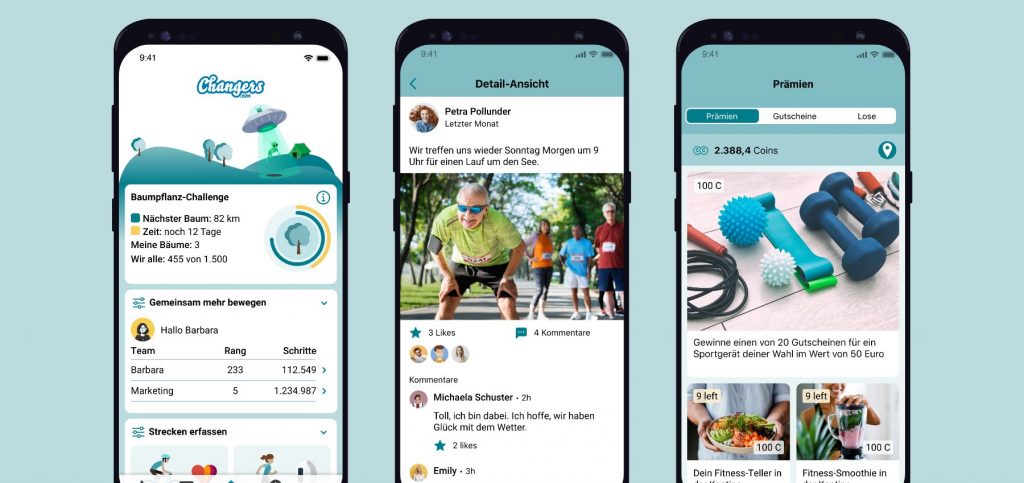
A team challenge is a great opportunity to combine team building with employee motivation in a playful way. Community features—such as arranging group runs or sharing achievements—make the experience even more engaging.A particularly simple way to organize these competitions is through apps such as the Changers Fit App. With it, step challenges and cycling competitions can be set up easily. Achievements can also be connected to social projects or collective tree planting, increasing positive impact even further.
How Companies Measure the Effectiveness of Employee Motivation Programs
Companies can measure the success of employee motivation programs using metrics such as:
- employee satisfaction surveys
- turnover rates
- performance reviews
- absenteeism data
Advanced tools such as 360-degree feedback and employee engagement tracking also provide deeper insights into workforce well-being and motivation.
Survey Tools for Collecting Employee Feedback Effectively

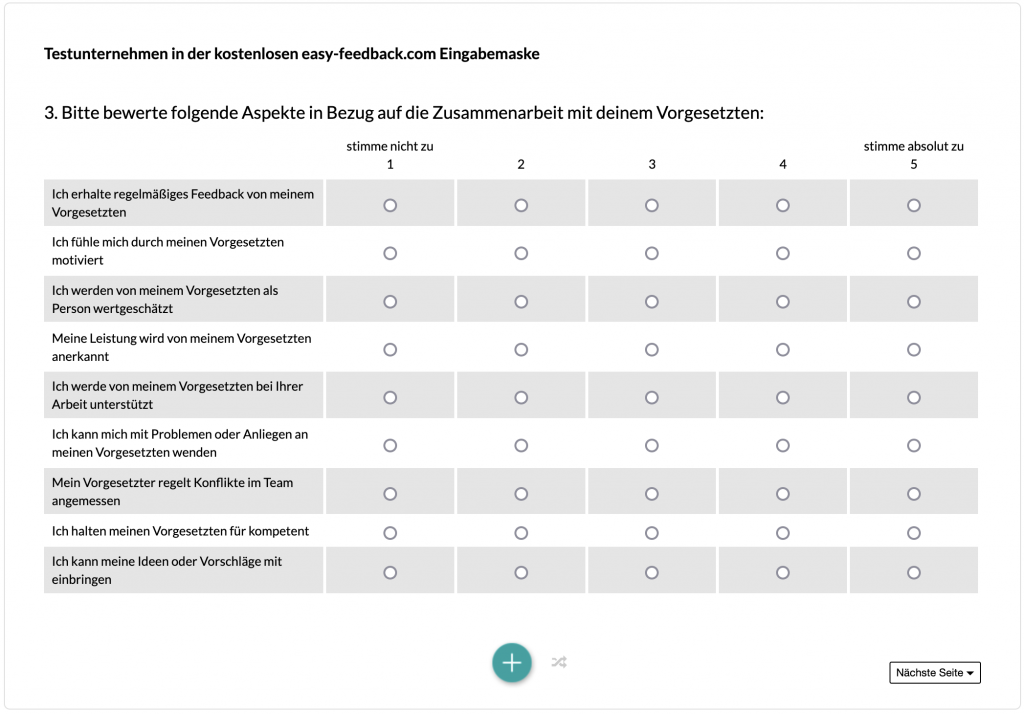
An efficient way to quickly and easily collect employee feedback is by using online survey tools. Platforms such as Questback (https://www.questback.com) or Easy Feedback (https://easy-feedback.de).are recommended options. Easy Feedback even allows companies to start a survey with a ready-made questionnaire free of charge.
Ask employees to evaluate different aspects of collaboration with supervisors. Using a scale from 1 to 5 ranging from “strongly disagree” to “strongly agree,” employees can answer questions such as:
“I receive regular feedback from my supervisor,”
“I feel motivated by my supervisor,” or
“My performance is recognized by my supervisor.”
This type of feedback is valuable for improving communication and strengthening relationships between managers and teams.
Motivating employees: Use online survey tools for effective collection of employee feedback.
An efficient method to quickly and easily gather feedback on employee satisfaction is the use of an online survey tool. We recommend platforms like Questback (https://www.questback.com) or Easy Feedback (https://easy-feedback.de). The latter even offers the possibility to start a survey for free with a prepared questionnaire.
Ask your employees to rate various aspects of their collaboration with their supervisors. Employees can answer questions on a scale from 1 to 5, ranging from “disagree” to “strongly agree”. The questions could include: “I receive regular feedback from my supervisor”, “I feel motivated by my supervisor”, or “My performance is recognized by my supervisor”. This type of feedback is valuable for strengthening and improving communication and the relationship between leaders and their teams.
Conclusion: Employee Motivation Strategies Create Economic Benefits
Employee motivation strategies are crucial not only for improving workplace culture but also for achieving significant economic benefits for companies. It is a cost-effective method that often requires little to no budget because recognition and appreciation do not create direct costs.
However, the challenge lies in creating an optimal work environment, especially when managers’ self-perception differs from employees’ perception. Effective leadership is essential and develops best through open and honest communication.
When leaders understand what motivates employees and what the company needs, they can implement targeted employee motivation methods. Transparent decision-making processes and clearly communicated company values that encourage strong identification strengthen the connection between employees and the company.
By creating a culture that allows enjoyment at work and celebrates achievements appropriately, companies not only improve employee motivation but also increase productivity and overall profitability.
Investments in employee motivation programs pay off in many ways: they increase employee satisfaction, reduce turnover and absenteeism, and improve overall business performance. Engaged and satisfied employees are the key to sustainable business success.
Do you have questions? Get in touch—we look forward to helping you improve employee motivation strategies in your organization.
We look forward to getting to know you and exploring the potentials of the Changers Fit App for your company together.

Daniela Schiffer
d.schiffer@changers.com
+49 172 367 40 38