


Work Health Days in companies offer an excellent platform to inform employees in a comprehensive and compact way about healthy lifestyles and health-related topics in a single day. The goal is to raise lasting awareness of health-related issues and encourage reflection on unhealthy behaviors. A successfully implemented Work Health Day in the workplace requires thorough preparation and follow-up. In this article, you will find many tips on preparation and program planning, communication and invitations, as well as evaluation.
Employee health as a success factor for your company
Workplace health promotion has many positive effects, as it reduces sickness-related absences, increases employee satisfaction, and improves the overall performance of the team. Employees who feel healthy work more motivated, more productively, and are less prone to stress-related illnesses. This has a positive impact on efficiency and workplace atmosphere.
In addition, health-promoting initiatives support an attractive corporate image, which both strengthens employee retention and makes it easier to attract qualified skilled workers. A work health day is a low-threshold workplace health promotion offer for your employees to get to know healthy behaviors.
Planning a Work Health Day in 7 steps
To ensure that every work health day is a success, careful planning is essential. Before developing concrete ideas for your work health day, create a solid foundation with the following steps that you can build on again and again:
Step 1: Coordination and Responsibilities
Before planning the work health day begins, one or two people responsible for coordinating the work health day in your organization should be appointed. These individuals serve as the central points of contact for all stakeholders and are responsible for communication between the various actors.
Formation of the Health Day Working Group:
Determine who will be involved in planning the work health day in your company and encourage these individuals to participate. A larger committee promotes diverse ideas and realistic objectives and increases participation in the work health day through active communication among colleagues.
You Should Include:
- Company and HR management
- Works council, occupational safety specialists, and safety officers
- Company medical officer and representative for employees with disabilities
- Equal opportunities officer and experts from individual departments
- Specialist for addiction prevention and other relevant individuals
Step 2: Defining the objectives of the Health Day
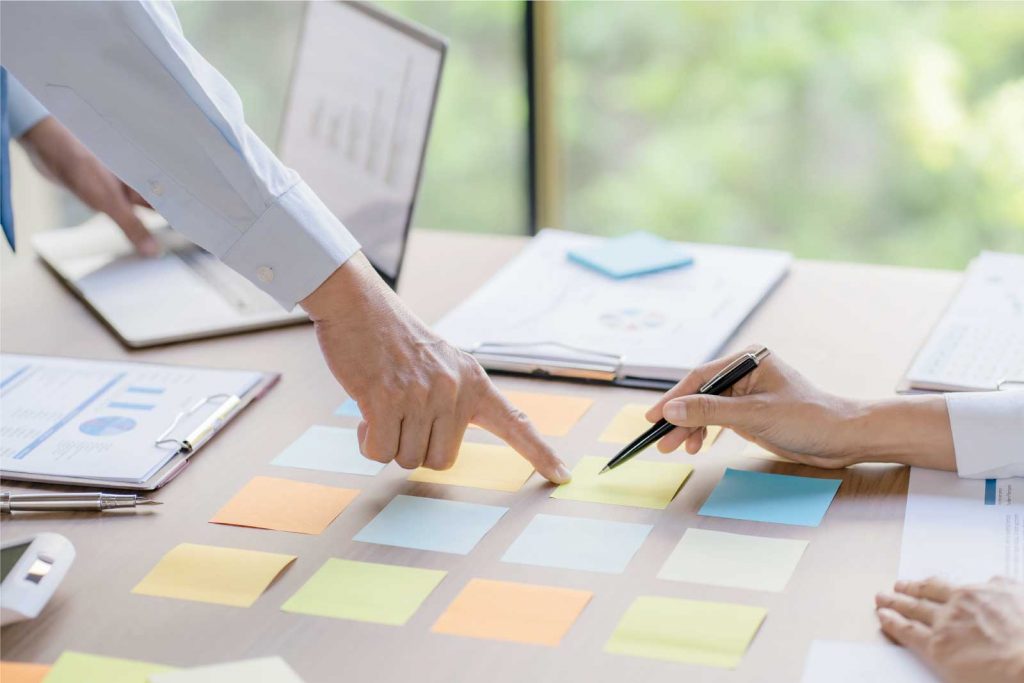
You may want to use your work health day to raise awareness of a general health topic, such as healthy nutrition or increased physical activity. Alternatively, there may be a specific focus, such as “back health.” Perhaps you’re also looking for a motivating kickoff for a new fitness program – here you’ll find new ideas for fitness challenges. To define the objectives, it is useful to consider the needs of different employee groups. For example, does your work health day need digital offerings for employees working from home, or should special incentives be provided to encourage on-site participation?
Once the objectives are defined, measurable key performance indicators can be established to evaluate success. Such indicators include, for example:
- Finalizing key details
- Number of participants
- Duration of participation
- Number of booked activities
- Feedback from participants
Step 3: When and where the Health Day takes place
Decide early on when the work health day should take place. Which months and days are most suitable for reaching as many employees as possible, and do not conflict with other important company events? If you are unsure about choosing a date, International Health Day on April 7 is an option. Each year, this day offers a new, globally relevant health theme from the WHO that can serve as inspiration for planning the content of your Health Day.
The choice of date is linked to the availability of rooms within the company and should therefore be checked in parallel. In summer, courses and sports activities may also be held outdoors.
To do:
- Clarify access to the event location and parking spaces for external providers
- Create a site plan to facilitate coordination of event locations and information stands
Step 4: Setting the budget for the Health Day
How much can and do you want to spend on the work health day? Higher budgets allow for a broader range of activities, but even with limited resources you can achieve a lot.
To do:
- Create a plan that includes technical, personnel, and financial resources
- Consider which materials are needed and what costs they will generate
- If budgets are small: look for creative ideas for your Health Day that are low-cost
Financial support for the work health day
A positive note is that many health insurance providers are willing to contribute to the costs of implementing Health Days in companies, and some even cover them entirely.
However, it cannot be said in general which health insurance provider is the best fit for your company. Some insurers only offer financial support for your corporate health management as part of a comprehensive occupational health management system (OHM), which is regulated through framework agreements.
To find out how insurers in your region operate, it is advisable to contact them directly. A good starting point may be the health insurance provider covering the majority of your employees.
Note: Some health insurance providers primarily use work health days for member recruitment. Such practices may not provide substantial added value for your employees. Therefore, carefully assess in discussions whether the insurer’s offerings meet your company’s needs in order to find the best partner for your work health day.
Step 5: Planning the program and schedule
Typical offerings of a work health day include lectures, workshops, as well as health measurements or check-ups. Various partners can be involved to create a diverse program:
- Health insurance providers and accident insurance institutions
- Sports clubs
- Pharmacies and medical supply stores
- Doctors and specialist speakers
- Opticians and hearing aid acousticians
- Nutritionists
- Physiotherapy practices
- Fitness centers
- Company canteen / caterers
Tip: There may also be yoga instructors, nutritionists, or life coaches among your employees whom you can involve in the program.
If there is a company canteen that can be included, the work health day offers an opportunity to make the menu sustainably healthier.
Here is an overview of possible cooperation partners and their contributions to the work health day; a list of established corporate health management (CHM) providers can be found in a separate article:
| Possible partners | Contribution | Topic area |
|---|---|---|
| Health Insurance provider and Accident Insurance | Information stands | Health promotion, occupational safety, rehabilitation, addiction prevention |
| Sports Clubs and Sports Associations | Information stands | Counseling, interactive stations, motivation for movement, indoor and outdoor activities (if possible) |
| Pharmacies and Hospitals | Measurement stations | Advice on health products, measurements for blood pressure, blood sugar, cholesterol, lung function, etc. |
| Hospitals or Doctor’s Offices, Scientific Staff | Lectures, seminars, Health fair booth | Cardiovascular diseases, back pain, osteoporosis, risk factors, practical experiences |
| Opticians, Special Providers | Health fair booth | Vision tests |
| Hearing Aid Acousticians, Opticians | Health fair booth | Vision and hearing tests |
| Nutritionists (possibly with cafeteria) | Lectures, seminars, individual counseling | Lectures on healthy eating, weight and body fat measurement, individual counseling |
| Cafeteria, Caterer | Health fair booth | Healthy breakfast, fitness buffet, fitness plates, vegan dishes, etc. |
| Physiotherapy Practices | Information stands, courses, lectures | Lectures, mobile massages, Pilates, functional tests, back training |
| Fitness Centers | Information stand, courses | Interactive stations, sports offerings |
| Experts, Speakers and Lecturers | Lectures, seminars | Based on thematic focus |

Time planning of the Work Health Day
In addition to content planning, program planning also includes time scheduling based on the number of participants. First, consider how many people you want to reach and plan the time per participant accordingly. Most check-ups, including a short follow-up discussion, take approximately 15 minutes. The respective providers can give you precise information about the exact time frame required for their service.
You may also conduct a preliminary email survey to assess employees’ interest in different workshops or seminars in order to adjust the planning accordingly. It is also important to clarify the company’s release policies regarding employees participating in the work health day.
Step 6: Communicating the Work Health Day in the company
It is important that employees are informed about the date of the work health day well in advance. To do this, you should work closely with your internal communications department to identify the best ways to reach staff. Proven communication channels include:
- Work Health Day invitations sent via email to employees
- Work Health Day posts on the intranet
- Use of internal communication platforms for posts and reminders
- Flyers for the Work Health Day displayed in the company canteen
- Posters in coffee kitchens and elevators
A communication strategy with creative approaches can significantly increase participation motivation. Motivational slogans on posters in coffee kitchens or the canteen, as well as floor stickers placed in front of elevators to encourage using the stairs instead of the lift, help to promote the work health day in a playful and engaging way.
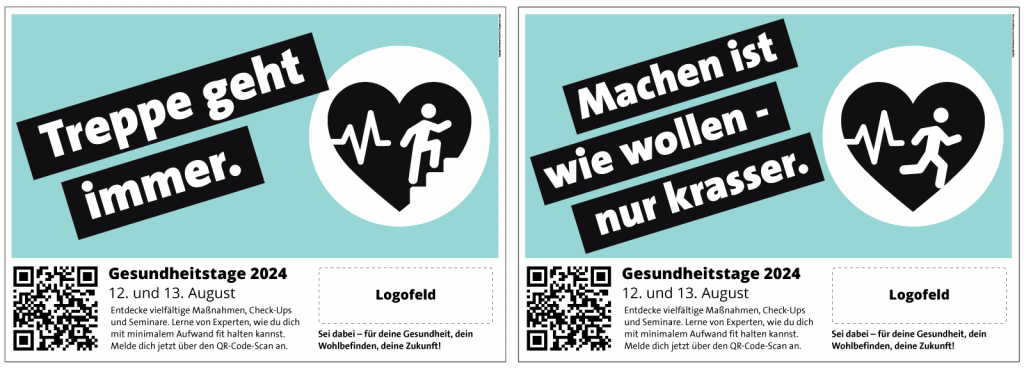
“The Steps Challenge for more awareness.”
TIP: Here you will find a template for an invitation to your work health day
Step 7: Collect feedback and evaluate success
After the work health day has been successfully carried out, it is essential to carefully follow up on the event. It is beneficial to collect feedback from participants immediately after the event. This can be done through feedback forms and conversations with colleagues, during which quotes can be gathered.
You should also document the day with photos that can be used in subsequent reporting, such as articles in your employee magazine or on the intranet. A photo collage in the foyer or publication in the press can also contribute to a positive public image of your company.
Analyzing the feedback is also useful as a basis for future planning. The previously defined key performance indicators can now be reviewed to evaluate success. Which goals were achieved, and where is there room for improvement?
TIP: Communicate your successes internally to management levels as well, for example in the form of a summary report. Also thank all individuals who supported you during the event.
Support for preparing employees for the Work Health Day
If you want to positively engage employees with the topic of health in advance of the work health day, the Changers Fit app is often used to communicate the upcoming event and to raise awareness and motivation among employees. A proven approach is to prepare the work health day with a “Work Health Day step challenge” starting four weeks before the actual event. This team activity not only helps spread awareness of the date but also fosters team spirit and anticipation for the Health Day in the company. On the day itself, you can reward the team with the highest step count and host an exciting raffle with healthy prizes such as fitness meals, swimming pool visits, or massages.
We do not offer work health day ourselves, but would like to highlight some professional providers who can enrich your company Health Day as examples.
TIP: If you want to combine the work health day with the development of an integrated health management system, it is advisable to seek support from corporate health management (CHM) experts who can assist you in building a healthier and more productive organization.
The following full-service providers for your work health day are also experts in corporate health management.
BAD GmbH – Complete service provider
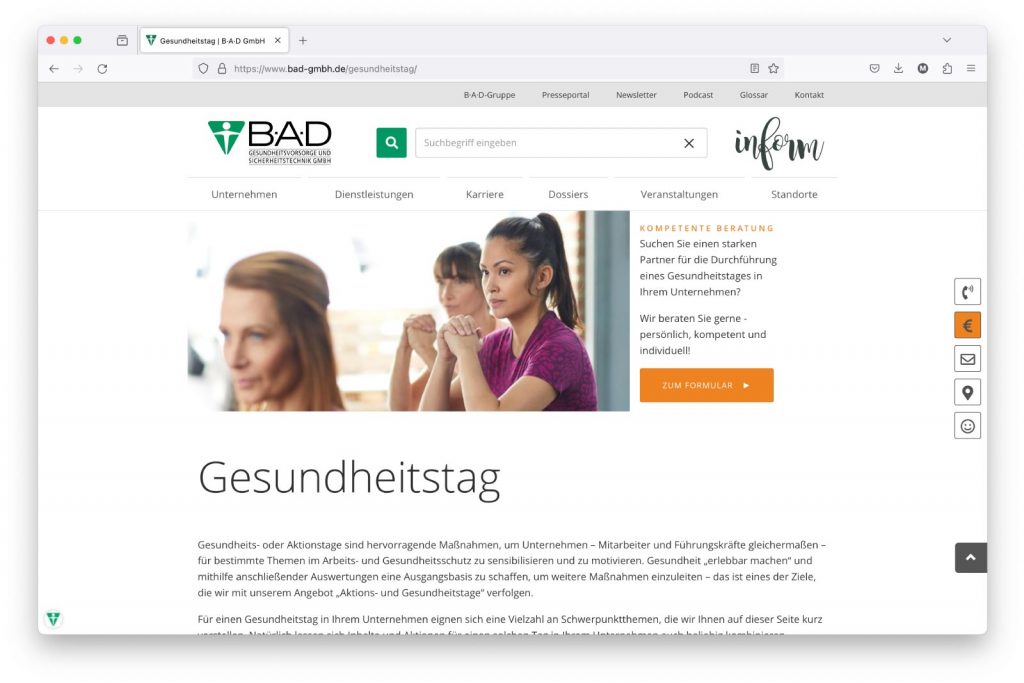
Making health “experiential” and creating a baseline through subsequent evaluations to initiate further measures – this is one of the goals we pursue with our “Action and Health Days” program. Find out more about the offer here: B•A•D Gmbh
Team Gesundheit – Complete service provider
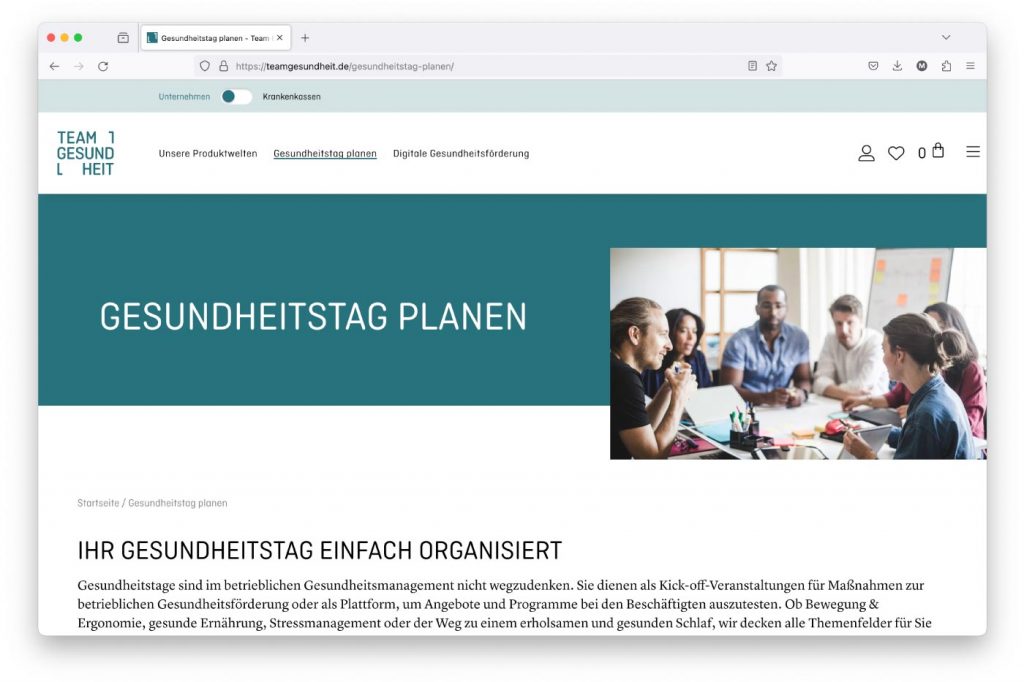
From consultation to evaluation – we handle the complete management of your health days. See what that looks like here: Team Gesundheit
Company move – Complete service provider
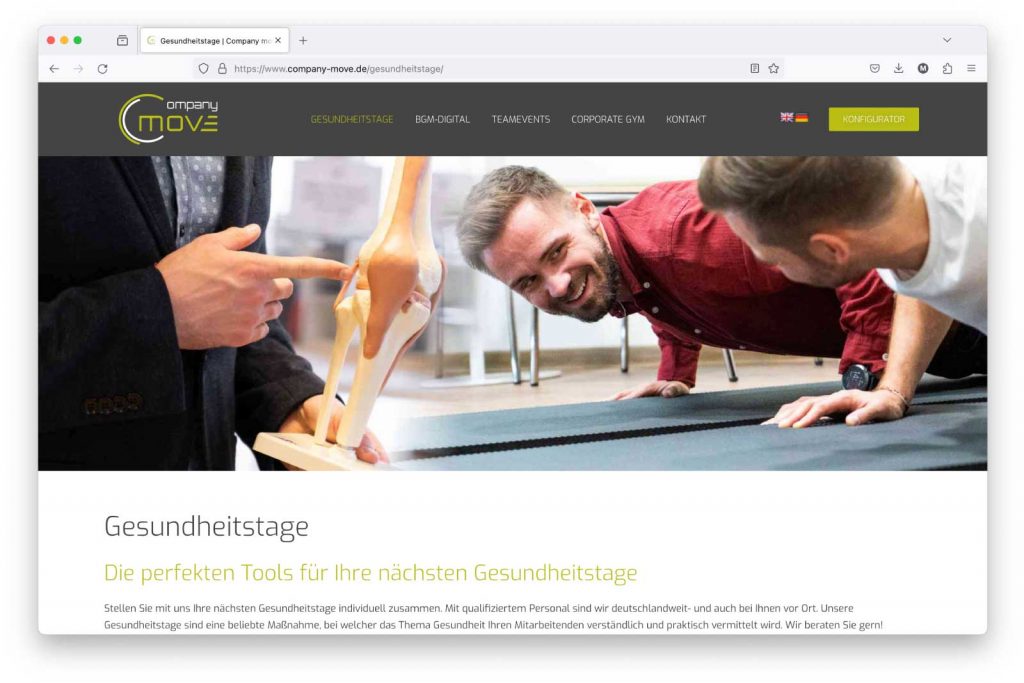
Company Move is available throughout Germany. Clear and practical delivery at health days. Find out more about the offer here: Company Move
Summary: Health Days in companies are a valuable investment in employee health
Work health days are an effective tool for raising awareness of health-related topics and sustainably increasing employee motivation and well-being. They not only promote employees’ physical and mental health but also contribute to a healthy corporate culture based on prevention and team spirit. With a clear plan and suitable partners, Work health days can become a regular fixture and have a significant impact. Work health days can also serve as a starting point and later an important motivational tool for successful workplace health management.
Do you have questions? Get in touch with us!
Let’s explore together the potential of the Changers Fit app in the context of work health days in your company. Write to us!

Daniela Schiffer
d.schiffer@changers.com
+49 172 367 40 38